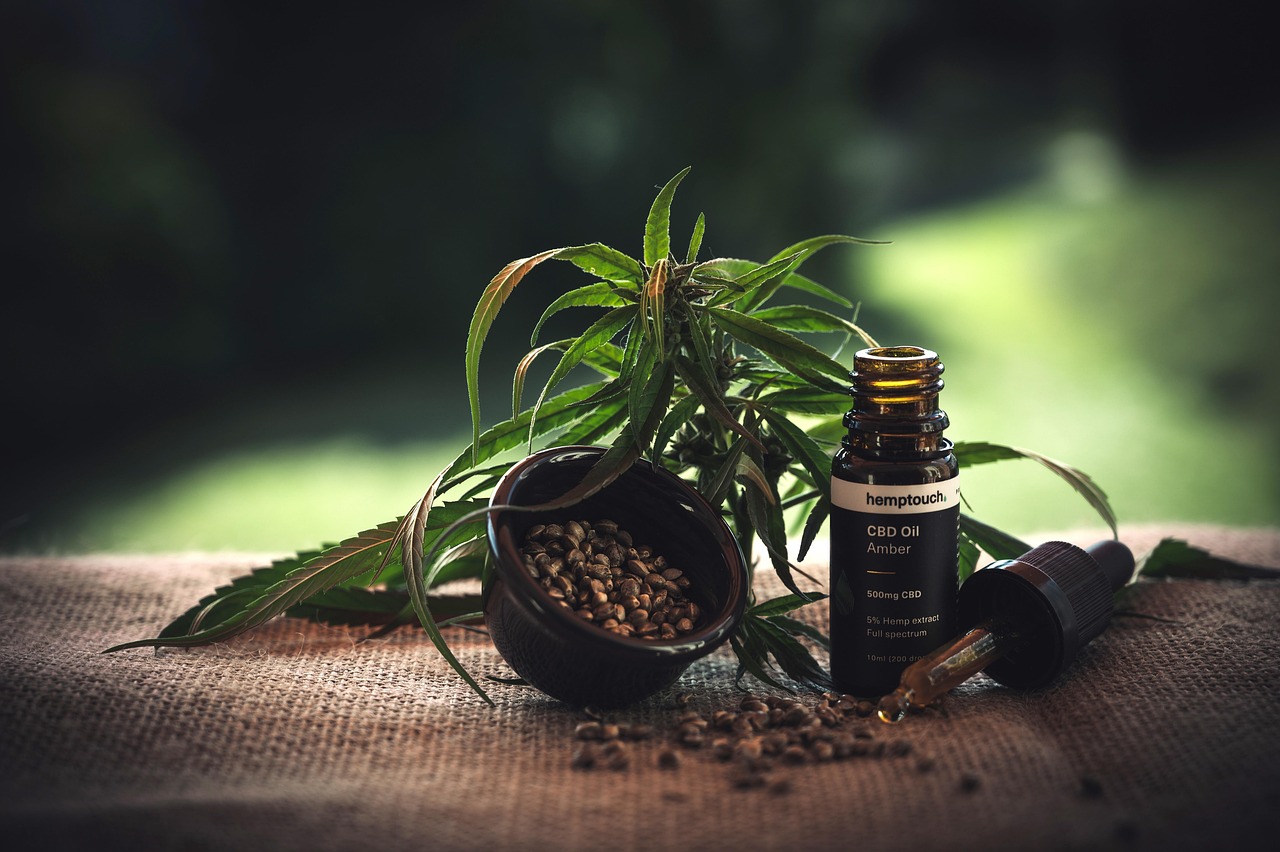
Every year as a Pharmacist I need to identify two goals to focus on for my Continuing Professional Development. This year, I chose to look at Medicinal Cannabis, as we are dispensing more CBD and THC, and I recognised I didn’t know much about it. For me, writing helps me learn and assimilate the information I have found out, so over the next couple of days I want to discuss Medicinal Cannabis, and then to take it back to homeopathy, I will look at the two remedies Cannabis Sativa and Cannabis Indica and what they look like.If you would like to know more about CBD or THC and whether they are right for you, then I highly recommend you see a practitioner who specialises in this.
Let’s look at history. Cannabis has been used for thousands of years – as far back as 2800BC it was mentioned in a Chinese Pharmacopoeia, and it is also in ancient texts about healing and medicine from the Hindus, Greeks, Romans and Assyrians (1). Western medicine however went through a dark period in the Middle Ages when much of this knowledge was lost, so cannabis was not reintroduced to western medicine until 1841 by William Brooke O’Shaughnessy (1). He had lived in India and wrote about many different therapeutic uses of cannabis, including its efficacy in a case of convulsions in a child (1). Cannabis probably came to New Zealand in the mid 1800s, and cannabis cigarettes were advertised in the NZ Herald in the 1860s as a ‘immediate relief’ for asthma, bronchitis, influenza, coughs and shortness of breath (2). Cannabis was recommended for everything from anaesthetics to coughs and chilblains (2).
Things changed around in the world in the early 1900s, and by 1927 New Zealand had passed the Dangerous Drugs Act in which cannabis was listed – although you could still get this on prescription (2). The import of medical cannabis was ended in 1955, but it wasn’t completely banned for medical use until the 1975 Misuse of Drugs Act (2). In the 1960s and 70s there was an increase in recreational use, and the Misuse of Drugs act made possessing cannabis criminal (2).
Investigation into cannabis was ongoing, from the first Cannabinol isolated in 1898, to Cannabidiol (CBD) discovered in the 1940s, and tetrahydrocannabinol (THC) isolated in 1964 (1). It wasn’t until 1988 that CB1 receptors were first discovered in a rat brain, 1992 when anandamide, a naturally occurring cannabinoid was discovered, and 1993 when CB2 receptors were found(1). Now that there was a growing understanding of how cannabis worked, there was an increase in interest in the use of cannabis as a medicine.
California, USA was the first place to legalise medical cannabis (2). New Zealand’s first approval was a single case, approved by the Associate Health Minister, of cannabis oil for a teenager in an induced coma in 2015 (2). Australia legalised medical cannabis in 2016, and in 2018 in New Zealand the Misuse of Drugs Act was amended to allow the use of terminally ill people to use cannabis (2).
New Zealand now has a Medicinal Cannabis scheme which allows licensed growers to cultivate, manufacture and supply cannabis as a medicine, and it makes cannabis available on prescription (2). CBD is a prescription medicine, and THC is still a controlled drug – but both are readily available, although not funded and can be expensive to access.
Before we consider the medicines and remedies, let’s look at how the endocannabinoid system works throughout the body.
The CB1 receptor is predominantly found in the nervous system, specifically the brain and the spinal cord, and they are way more prevalent than opioid receptors. Because these CB1 receptors are not found in high concentrations in the brainstem, which manages cardiac and respiratory function, there isn’t a risk of lethal overdose like you get with opioids. CB1 can also be found in peripheral nerves.
CB2 receptors are found in the immune system like monocytes, macrophages, B Cells and T cells, as well as the liver, spleen, and tonsils and can reduce inflammation. They are also found in the central nervous system (although not as prevalent as CB1) and are associated with inflammation.
The endocannabinoid system is one that balances the body – the endocannabinoids anandamide and 2-AG are released as a response to other neurochemicals, and travel backwards to the pre-synaptic neuron releasing these substances to reduce or stop over-expression. The word we use for this is homeostasis, which is about being in balance, and is important for everything from stress, sleep, mood, memory and brain function, to digestion, inflammation, pain, movement, cardiovascular and immune function.
Medicinal cannabis interacts with the endocannabinoid system, and while THC and CBD are the most talked about substances, there are so many more that all can have effects – minor cannabinoids, terpenes and flavonoids. It’s why there can be vastly different effects from different brands or formulations within a brand, because different strains of cannabis contain different levels of these substances, and they act in a synergistic way.
THC is the substance with the psychoactive effects of cannabis, and activates both CB1 and CB2 receptors. The CB1 receptors in the brain are responsible for changes in thinking and judgement, euphoria and slow reaction times, as well as reducing nausea, increasing appetite and altering pain sensations. However, it can also cause panic and paranoia, impaired memory and concentration.
CBD modulates the effect of THC and works in multiple places in the body. This means it has a wide variety of actions, including reducing pain perception, inflammation, anxiety and depression, stress responses and compulsive behaviours, as well as reducing nausea.
The minor cannabinoids, terpenes and flavonoids can have a wide variety of therapeutic effects, including reducing inflammation, depression and pain, as well as antiviral, antimicrobial and anti fungal effects.
The evidence for the use of medicinal cannabis in different conditions is variable, and recommendations for use by health authorities are conservative, usually as an adjunct and only if other options have failed. Some conditions that either THC, CBD or a combination are used for include chronic pain, intractable nausea/vomiting associated with chemotherapy, epilepsy, multiple sclerosis and more. If you do want to investigate medicinal cannabis for yourself, then talking with someone who specialises in this area is essential – someone who is aware of the ‘entourage effect’ of the other minor cannabinoids and which particular formulation would be the best for your situation. It is not a one-size fits all, and all preparations are not created equal.
There are also different ways of consuming medicinal cannabis.
Smoking is not recommended – not just because of the lung cancer risk, but because it also burns and destroys some of the cannabis, meaning you get less effect.
Inhalations – where it is vaporised then inhaled – is a quick and effective way of getting the medicinal effect. It is quick to take effect, but reasonably short lived.
Oromucosal drops is the most common form I see prescribed. Oromucosal forms are where the drops are placed under the tongue (sublingual), or in the buccal cavity between the cheek and gum. The effect is slower than for inhalations, but it does last longer, and may be better when a longer lasting effect is needed.
Oral forms – edibles – also work but the time for onset can vary depending on food in the stomach, and the bioavailability tends to be lower than the oils that can be absorbed through the mucous membranes in the mouth.
It is also important to note there can be interactions with other medication, and that in general starting low and slowly increasing is the safest way to start using medicinal cannabis.
As above, I recommend seeing someone who specialises in medicinal cannabis if you would like to explore if this is the right option for you.
I will be back next week with a post looking at the two homeopathic cannabis remedies, Cannabis Indica and Cannabis Sativa, and considering the indications for them.
References: