This week I’m sharing more of my learnings from the HRI Conference, and this one is a subject which comes up all the time in homeopathy – but how does it work?
Dr Alexander Tournier, who is the Chairman of HRI, gave a presentation on a recent publication of a scoping review of what published articles suggest as the mode of action of homeopathic remedies.
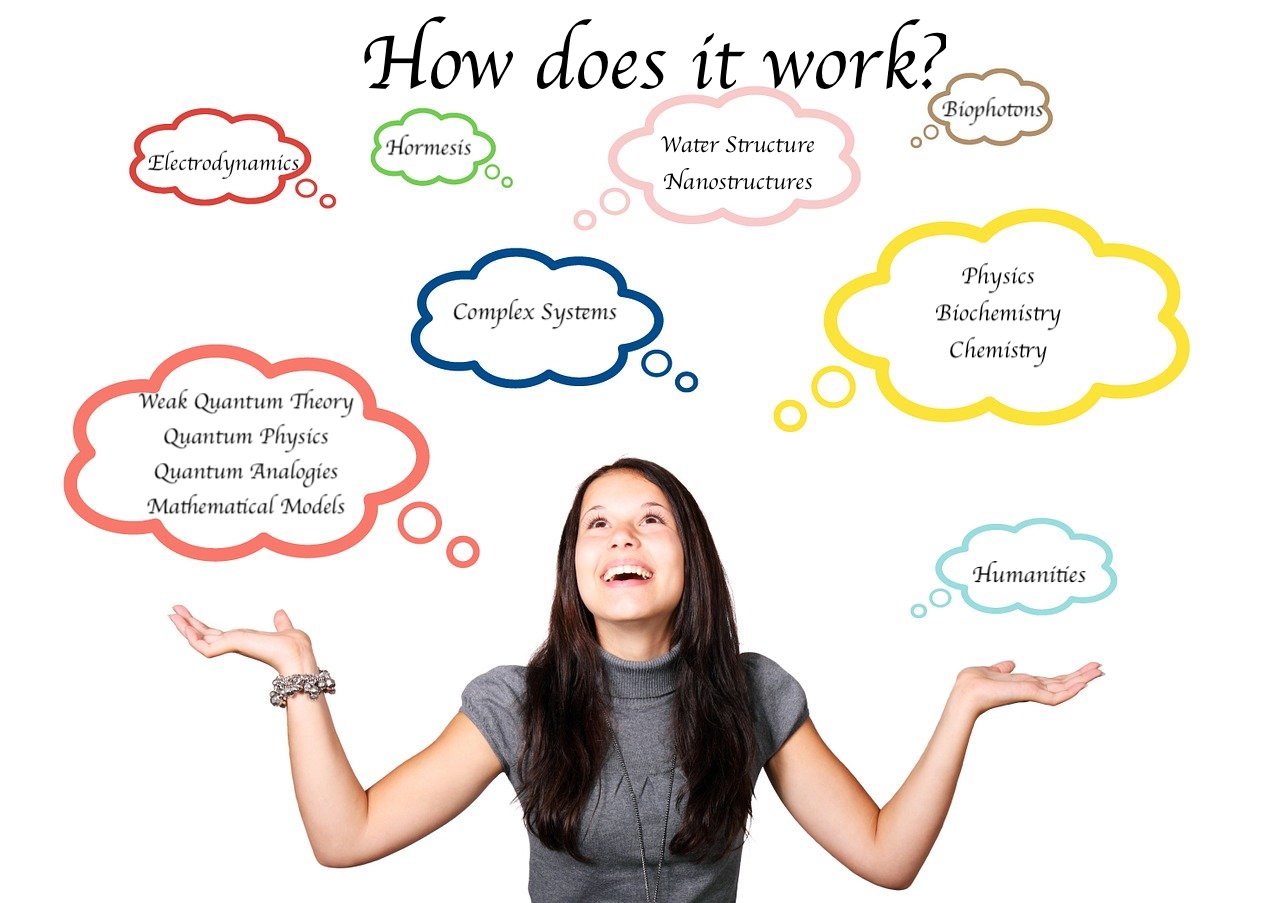
They looked at 216 published papers, which suggested 72 different frameworks for how homeopathy works. They managed to distil this down to 14 overarching frameworks, some of which interlock with other frameworks.
I’m going to discuss these in order of most commonly discussed, and try and break it down a bit more into what the different terms mean.
At 15%, Humanities was the most popular framework. This included philosophical arguments, semiotic concepts (signs, symbols, where the homeopathic remedy represents the disharmony, and the Simillimum signifies the disease state), non reductionistic theories, where the whole is more than the sum of it’s parts, and the whole person, individualism and the vital force are important.
During the roundtable discussion a presenter (I did not record who to attribute this) stated “What is information? Every person is a quantum object – we cannot tell how many cells, and need to look at the whole”, so while this ’non-reductionist’ theory fits under the humanities framework, it interlocks with weak quantum theory – more about that below.
Complex Systems was the second most published framework, with 13% of papers discussing this. Complex Systems theories included how health is interconnected and interdependent, (some cross over here with the non-reductionist theory above), and the ability to self organise (and therefore self heal!). Complex systems also include chaos, considering homeopathic philosophy and particularly the vital force, and phenomena like synchronicity.
Water structure was also an important framework at 12%. This proposes that there is a change in the structure of water when homeopathic remedies are prepared. Different models for this include clathrates which are basket like structures that form around a molecule and could be a mechanism for the water storing the memory, hydrogen-bond clusters, a change in the way the water forms , and exclusion zones, which is a fourth phase of water that ‘excludes’ solutes like particles and proteins, and only water remains, in a gel-like negatively charged matrix.
What is interesting (for me) about this, is it resonates with the work of Veda Austin in freezing water, she also talks about the fourth phase of water, and that it recognises information, whether words or pictures. If you have ever used a “paper remedy” by writing the name and potency of the remedy on a piece of paper and placing under a glass of water, and found this effect (as I have), then it confirms Veda Austin’s work that the intelligence of water can pick up pictures and words and respond to those.
Biochemistry (8%) are important concepts in integrative medicine, and I can see their application in homeopathy, although I’m not sure I agree they explain the mechanism of action. Biochemical theories include stress response, that homeopathic remedies can affect that, that there is an up or down regulation in gene expression, and homeostasis – which is where in disease there’s a disturbance in homeostasis, and the remedy stimulates the self healing capacity with the body coming back into balance.
Nano structures (8%) is a theory I have heard a lot about how homeopathy works. This includes that particles as small as 1-100 nanometres in size are responsible for the homeopathic information, nano bubbles – which are not the substance itself but a bubble the same structure/shape/other descriptor of the remedy, and the silica hypothesis, in which silica dioxide nano particles, possibly from the glass used in preparing the remedy, are responsible for holding the remedy either from adsorbing the substance onto the surface, from structural imprinting or as an energy or frequency based information. (However, as one of the other presentations shared that it didn’t matter if the remedies were in glass or in plastic, I’m not sure this theory holds together. More on that presentation next week!)
Weak Quantum Theory (7%) means that it is not maths, or physics, but still has some level of general quantum theory. This is sometimes used to discuss consciousness, intention and healing effects, and in these papers discussed the “generalised entanglement between patient, remedy and practitioner”. For me this really makes sense – other practitioners will also have seen the healing effect of just the consultation, whether it is being truly listened to, or something else (and a discussion for another day, why if we are designing a trial comparing homeopathy to placebo then ALL participants need to have that consultation process). There is also the microscopic scale, which states that tiny changes can trigger a shift on the whole system, which is also a great way of describing how a homeopathic remedy can have an effect on other systems of the body, including things the practitioner didn’t even know about.
Mathematical Models (7%) were another framework, and included differential equations, statistical methods and simulations. It takes me back to 7th form calculus (not my best subject), and while I don’t really understand this, I have respect for people who can make sense of life through maths! I think it is to do with describing how things change in the body using maths, but it is way past the knowledge that I have.
Electrodynamics (6%) is fascinating, and I have a friend who talks about the bio-field and its relation in homeopathy. This is about electric and magnetic fields and interaction with charges and currents, and potentially explains why electromagnetic frequency (EMF) radiation also can block homeopathic remedies working (shown in a poster presentation at the conference). In other words, this does look at the ‘aura’ around the body, and theorises that that is how homeopathy works.
The Physics framework (6%), while interlocking with quantum physics, had its own separate concepts like syntropy and retro-causality. Syntropy is a theory that systems move towards order, harmony and unity, which makes sense when considering healing and consciousness. However it also means that time is not linear (past-present-future), and suggests that patterns in the future can affect the present – which is also the theory of retrocausality, where the present is pulled towards a particular future. This is a mind blowing idea, and for some people may fit with the idea of destiny – but could also be disturbing and traumatic to consider if your past or present has traumatic events.
Quantum Physics (5%) is separate to physics, and suggests that particles can exist in multiples states simultaneously. There was also a presentation in memoriam of Professor Marc Henry, with one quote from him that really stood out: “Matter does not exist! In quantum physics, materiality is nothing more than phase coherence of an energy source”.
Other quantum physics terms that apply to homeopathy are super position, which means a electron or photon can be in multiple states at the same time, until it is measured, and this potentially applies to how remedies work, with the multiple states of dilution at the same time. Entanglement is the other theory, which is about how when particles that are linked what happens to one will immediately to the other, regardless of how far apart they are. This is often used in radionics, but also applies in homeopathy with how a remedy that you take by mouth, can almost instantly have an effect on an acute condition.
Quantum Analogies (4%) are more abstract, theories without formal logical or mathematical structure – I don’t have more information about these.
Hormesis (4%) is the dose response relationship, where small doses stimulate or promote healing, and large doses can harm or kill. This can be showed by graphing an inverted or upside down U shape – (low doses no effect, then beneficial effect at the top, then negative effect) or a J shape (Beneficial at low doses, no effect at medium doses, harmful at high doses.
Chemistry was proposed by 3% of papers. The chemical principles of chemical reactions, impurities, and equilibrium could be part of the mode of action. In my understanding (not having read the included papers) this is problematic though for our high dilutions, but may certainly explain things in our low potencies, under 6x or 3c.
The last framework, at only 2% of papers was the proposition that biophotons explain how homeopathy works. Organisms emit a low level of “coherent photon emissions”, or rather they can show that living organisms, whether plants, animals or humans, produce light. Using electro-photonic analysis they can also see the light that remedies emit, and distinguish between different remedies. Is light the signal a homeopathic remedy gives to the body? One of the experts at the Roundtable on Mechanism of Action (I’m sorry again I cannot attribute this correctly) stated “Even in a vacuum there is light and that carries bio energetic information”
So, what does this all mean? We still don’t know how Homeopathy work. But we can prove that it does work.
If that doesn’t help you next time you have a conversation with someone about this, ask them how Paracetamol works. That’s right, we still don’t have an exact mechanism of action of Paracetamol, despite the fact this has been a widely used pain killer for decades. We know it works, and so we continue to use it in medicine.
This has been published, however unfortunately the article is not freely available online: Mapping the Theories and Models on the Mode of Action of Homeopathy: A Scoping Review, by Dumbrowsky, C., Klein, S.D., Würtenberger, S., Baumgartner, S., and Tournier, A.T. from the Journal of Integrative and Complementary Medicine, 2025 Jun 11. doi: 10.1089/jicm.2024.1007. https://pubmed.ncbi.nlm.nih.
I’m also following this up with another review presented by Professor Stephan Baumgartner looking at 30 years of basic research in homeopathy. Check back in the next week or two to hear more about whether the effects are beyond placebo and his understanding of the biomedical mode of action.