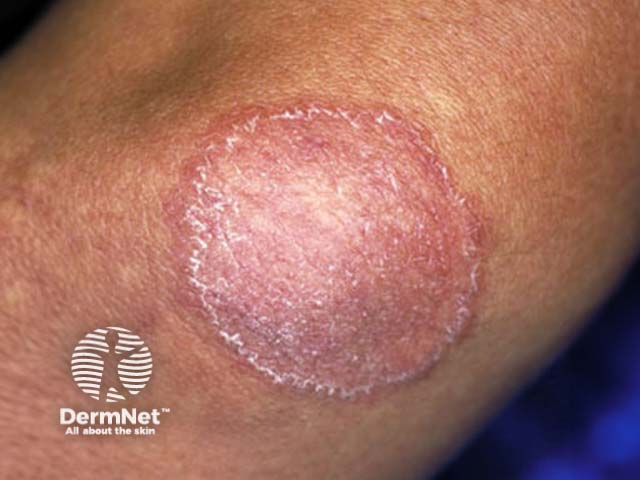
I had an itch the other day, and just assumed it was a mosquito bite. However when I was still itching a few days later I actually looked and realised it had the tell-tale circular shape of ringworm.
First of all, ringworm is not actually a worm or a parasite. It is a fungal skin infection that can be easily transmitted to others, an is zoonotic, meaning it affects both animals and humans. It is sometimes also called Tinea corporis, and s a circular red patch, which can be scaly with a clear centre and raised, red border. It can slowly grow, become larger as the infection spreads, and is very itchy.
In general, fungus prefer warm and moist environments to grow, and while ringworm can also thrive in these areas (like body folds and the groin), it can also be found on other parts of the body. The spores can be easily spread, particularly through direct skin-to-skin contact with someone else infected or animals, or through sharing clothes, towering or contaminated surfaces and equipment.
The main conventional treatment of ringworm is an anti fungal cream, typically miconazole, applied twice daily for 2-4 weeks. This works by stopping the fungus growing – this makes it important to continue treatment for two weeks after the visible rash has cleared, making sure that the immune system kills all of the fungus. It is not unusual for me to see people with recurring fungal infections because they stop the treatment when the rash disappears, not understanding that the fungus isn’t completely cleared at that point.
Hygiene is important – keeping the area clean and dry, and as this is spread by contact, avoid sharing clothing or towels. However, this does not mean actively disinfecting your skin. Soap and water when necessary, but supporting the skin microbiome, so that once the ringworm has resolved our normal, healthy skin bacteria can repopulate the area is important. We don’t want to kill all the good guys as well!
On the alternative side, there are a number of options you can use for ringworm, but the key is the continued use, like with miconazole. These include:
- Apple cider vinegar – helps with the pH of the skin, as well as having anti fungal properties.
- Angi angi (usnea barbata) oil – this is made from a lichen with strong antimicrobial and anti fungal properties.
- Tea tree oil is well known for its antimicrobial properties, but should be diluted before application to the skin or it may irritate.
- Garlic is also a broad spectrum antimicrobial, and well known for its anti fungal properties against candida (thrush), which is a different type of fungal infection. This can be applied topically.
- Coconut oil also has a natural anti fungal properties, and could be useful for adding the garlic or the tea tree oil.
When we’re looking at ringworm (and other fungal infections) holistically we need to consider what drives fungal infections.
A balanced diet, not too high in processed carbohydrates and sugar is important. While ringworm is feeding on the skin cells, and not directly on sugar like candida, in general sugar lowers immunity and higher sugars do promote the growth of fungal infections. A diet high in whole foods like fruit, vegetables, and unprocessed meats also provides micronutrients like vitamins A, C and E which are important for the health of the skin and Zinc which is important for immune function. If there is a gut dysbiosis – where the bacterial mix is not right this impacts immunity (making us more prone to infections), and can often be seen in the skin with rashes.
Homeopathy involves looking at the whole person and what is happening for them. There are over 150 remedies directly listed for ringworm in my repertory, and as homeopathy stimulates the body to come back into balance, it is likely there are many more remedies that will help.
Tellurium is a remedy for ringworm that can appear on any part of the body. There can be stinging sensation and itch, and the rash can have a raised ring, which is bright red and sharply defined. I have used this in a low potency (6c or 12c) daily specifically for ringworm.
Other remedies do not often mention ringworm in their materia media, but have symptoms consistent with ringworm – these include Sulphur, Morgan Bach (bowel nosode), Petroleum, Sepia, Baccilinum and Natrum Muriaticum. These would be chosen in a classical homeopathic manner where your holistic well being is taken into account.
If you don’t get results with Tellurium, don’t give up on homeopathy, just contact me or your homeopath for an appointment to look at everything that is going on for you, not just this outer skin layer.